Dorm-Proof Student Monitor Setup: Space-Saving Solutions
By Elena Petrovic • 9th Nov
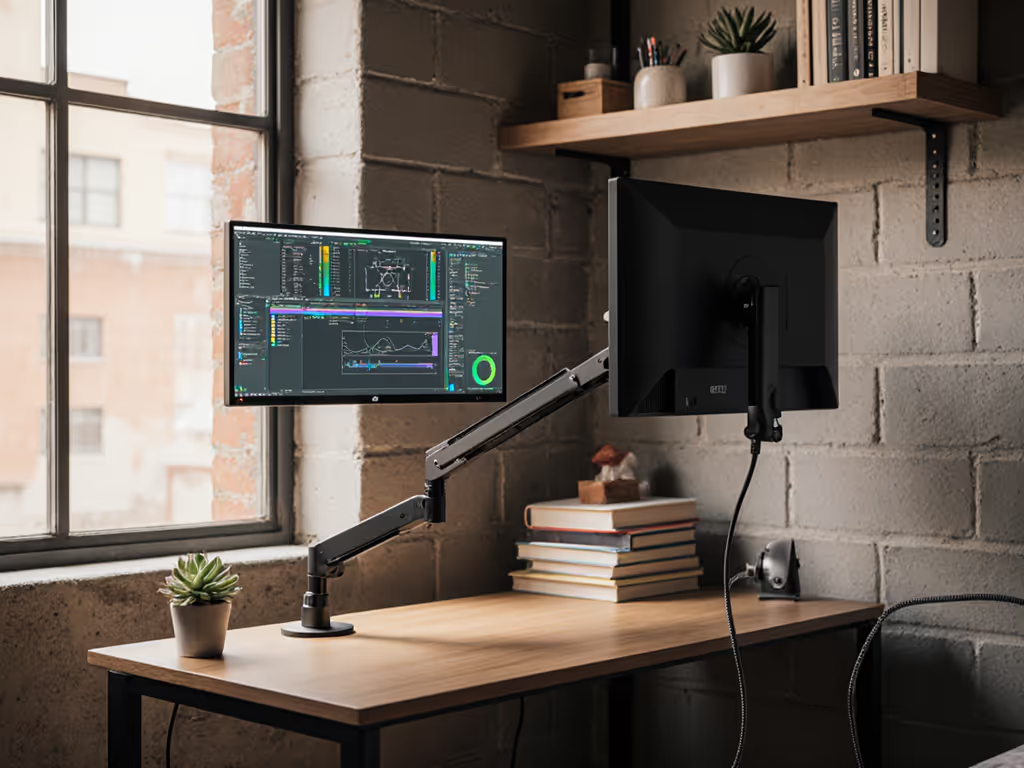
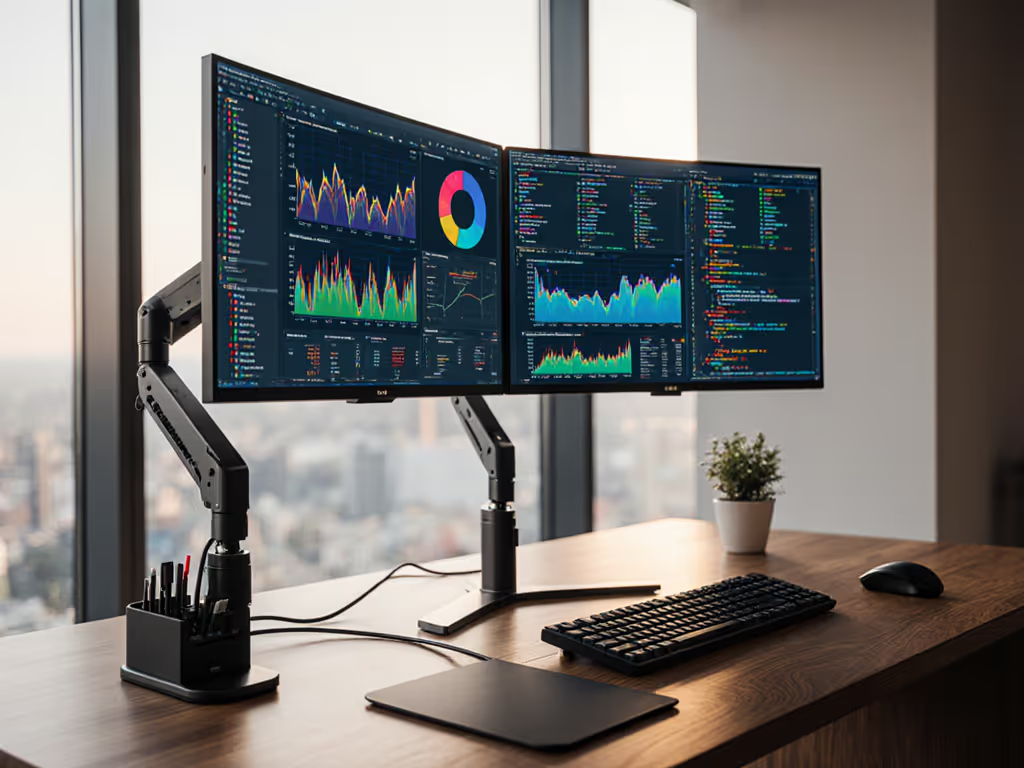
As a color workflow specialist who treats mounts and light as part of the image pipeline, I've witnessed countless students struggle with inadequate student monitor setup solutions that compromise both productivity and visual accuracy. When your learning environment doubles as your living space, proper remote learning monitor accessories become non-negotiable elements of your academic toolkit. Consistency isn't just about color gamut, it's about creating a stable visual environment where your monitor remains precisely where it should be, regardless of your cramped dorm room dimensions or shifting study routines.
The Stability Imperative
During a critical color grading session last year, I discovered that a seemingly secure monitor arm had developed micro-movement. Every time I adjusted settings, minute vibrations from the panel itself created imperceptible shifts in reflections that altered my perception of black levels. After isolating the mass, implementing damping solutions, and addressing cable strain, I regained the visual stability necessary for precision work. Stability is a spec. It's not merely an afterthought in your monitor configuration, it's foundational to accurate visual assessment.
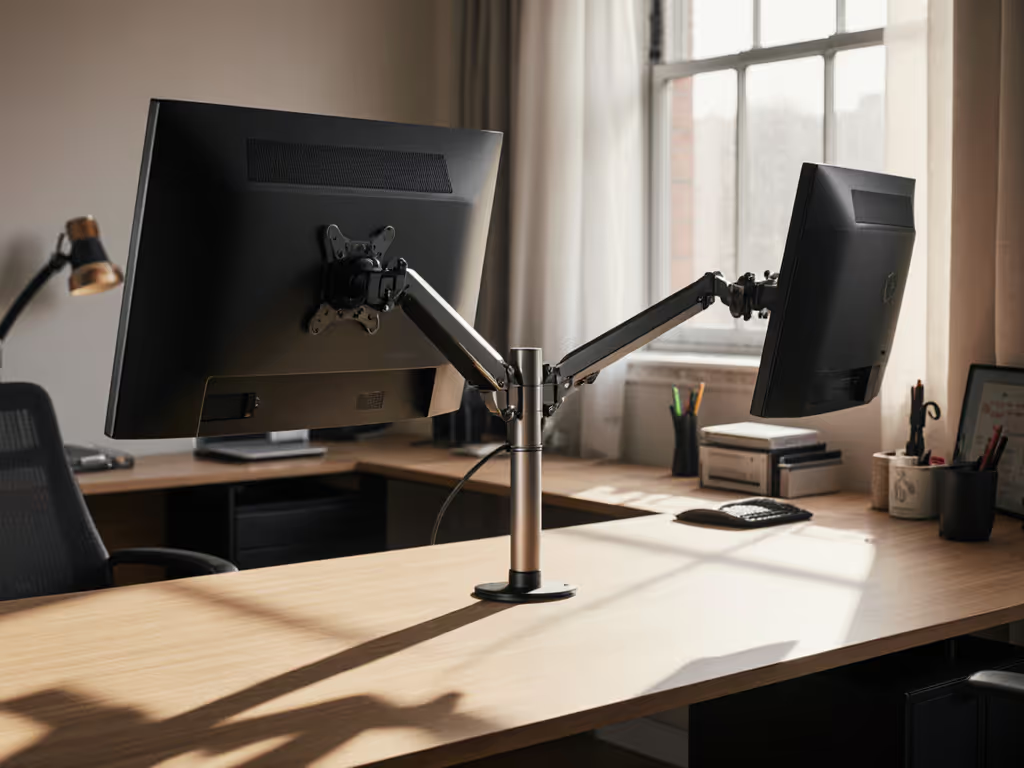
For students working in tight quarters, mechanical stability takes on special significance. When your desk doubles as your dining surface and your bed is just feet away, accidental bumps and vibrations are inevitable. The best dorm room monitor solutions account for this reality through thoughtful mounting strategies that minimize movement while maximizing usable space. If you're choosing between a wall mount and a desk mount in a small room, see our space-saving monitor mounts comparison.
Space Constraints: The Dorm Room Reality Check
Let's examine the mathematics of dorm space. According to a 2024 study of university housing, the average American dorm room measures 10 feet by 12 feet (approximately 120 square feet). When you subtract space for your bed, closet, and basic furniture, your dedicated workspace often shrinks to a mere 20-30 square feet. In European institutions, the situation is frequently more constrained, with some single rooms measuring as small as 80 square feet total.
This spatial reality necessitates precision in your space-saving student desk configuration. Before selecting any monitor solution, measure your available depth (most dorm desks provide only 22-24 inches of working depth), considerably less than the ideal 30+ inches recommended for dual-monitor setups. Attempting to force a standard configuration into this constrained environment creates ergonomic compromises that manifest as neck strain and visual fatigue over time. To dial in safe screen placement in tight spaces, use our ergonomic monitor height guide.
Mounting Strategies That Maximize Space
Single Monitor Optimization
For most students, a single well-positioned monitor delivers superior results to a cramped dual-screen arrangement. Consider a free-standing monitor stand that elevates your display to eye level while creating valuable under-monitor storage space. The Hemudu HT05B-001, for instance, provides height adjustment, tilt, and rotation capabilities within a footprint of just 11.8 x 7.9 inches (critical when every centimeter counts). Its tempered glass base offers stability typically found in heavier solutions, reducing the micro-vibrations that degrade visual accuracy.
When implementing any monitor stand, ensure it accommodates your specific display's weight and VESA pattern. Many student monitors fall within the 13-27 inch range, with weights between 5-15 lbs, but verify your model's specifications before purchasing. Stability testing should be part of your evaluation process, and you should gently nudge the setup to ensure minimal oscillation.
Cable Management for Clean Workflows
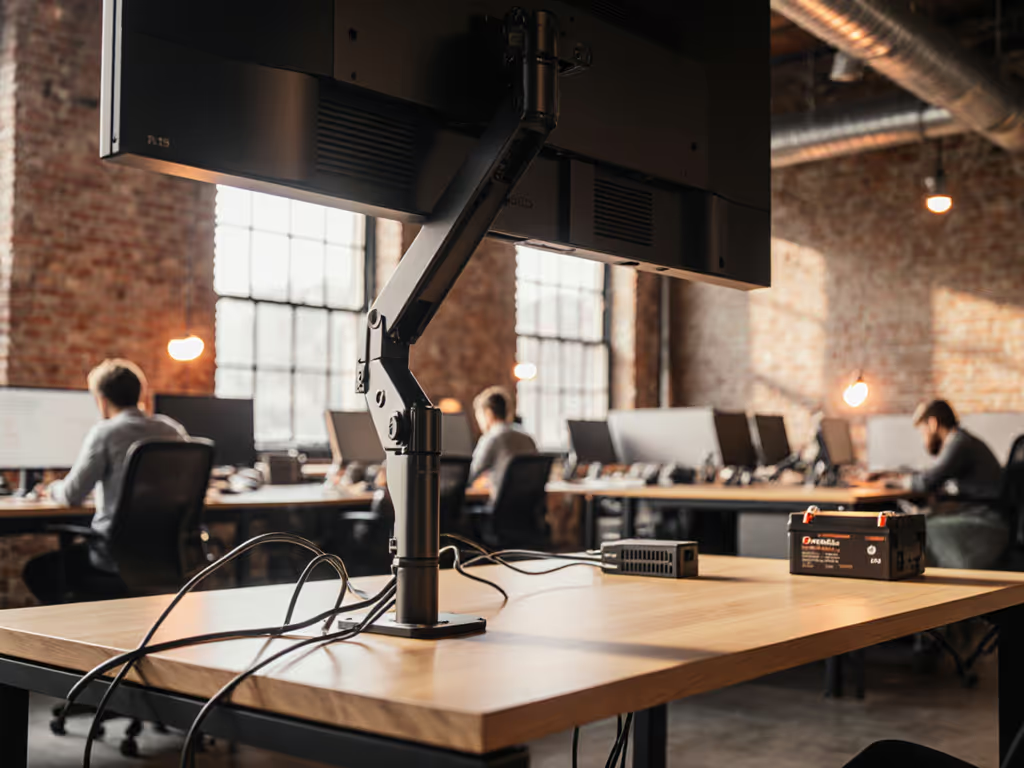
Cable clutter represents both a space and stability issue in student environments. Loose cables create tripping hazards while exerting unpredictable tension on your monitor mount. Invest in a cable management solution that secures connections without creating strain points. For USB-C connected displays, consider a single-cable solution that consolidates power, video, and data, reducing connector count by as much as 70% according to recent industry testing.
Color accuracy includes the mount, the cables, and the light. This principle applies equally in a dorm room as in a professional grading suite.
For budget study setup configurations, repurposed cable ties or inexpensive adhesive management channels can create significant visual and physical space improvements. Position your primary connections at the rear of your desk to minimize tension when moving between sitting and standing positions (a particularly important consideration for adjustable desks that now occupy nearly 40% of university workspaces).
Environmental Considerations for Mobile Setups
Unlike dedicated studios, student spaces experience frequent environmental shifts. Natural light patterns change throughout the day, roommates move about, and building HVAC systems create subtle vibrations. Your monitor solution must account for these variables:
- Lighting: Position your display perpendicular to windows to minimize reflections that disrupt color accuracy
- Surface stability: Avoid placing monitors on surfaces that resonate with building foot traffic
- Temperature: Maintain consistent room temperature to prevent LCD panel expansion/contraction
Many students overlook how room acoustics affect visual perception (low-frequency vibrations from nearby speakers or HVAC systems can induce monitor vibrations that alter your perception of subtle details). When possible, isolate your monitor setup from these sources through strategic placement.
Future-Proofing Your Mobile Workspace
As you navigate multiple academic years, your student monitor setup should accommodate evolving needs without requiring complete replacement. Consider these forward-looking elements:
- Modular mounting solutions that adapt from dorm room to apartment
- Standardized cable connections that work across multiple devices
- Adjustable height mechanisms that accommodate both seated and standing work
- Universal VESA compatibility for future monitor upgrades
The most successful space-saving student desk configurations prioritize adaptability alongside initial space efficiency. A monitor arm that accommodates up to 32 inch displays might seem excessive for your current 24 inch screen, but it provides a seamless upgrade path when your academic requirements demand higher resolution.
Conclusion: Stability Beyond the Screen
Your monitor setup represents more than just pixels and resolution, it's the foundation of your visual workspace. The stability of your mount, the integrity of your connections, and the consistency of your environment collectively determine your visual accuracy. As you select dorm room monitor solutions, remember that the cheapest option often becomes the most expensive when it compromises your work quality or requires replacement.
For students pursuing visual disciplines (from graphic design to data analysis), the right monitor configuration directly impacts academic performance. Consider how your specific discipline's visual requirements might inform your space-saving choices. Photographers need precise color representation, programmers benefit from high vertical resolution, and video editors require consistent motion rendering.
Further exploration of mounting techniques, environmental considerations, and space optimization strategies will reveal how small adjustments can dramatically improve your workspace functionality. Remember that in visual work, consistency is image quality, and that consistency begins with stability long before it reaches the screen.
Related Articles