DCI-P3 vs Adobe RGB: Essential Monitor Accessories Guide
By Ravi Patel • 10th Dec
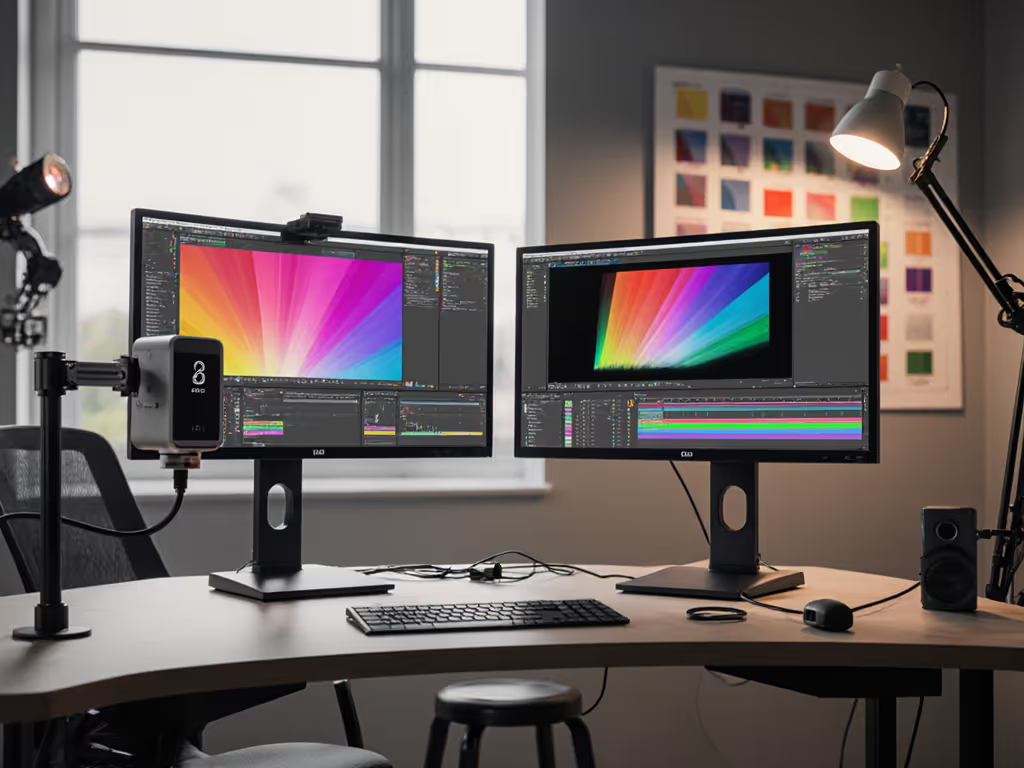
If you're building a color-accurate workspace, understanding DCI-P3 vs Adobe RGB setup requirements is only half the battle. Your color gamut monitor accessories (from arms to calibrators) determine whether that wide gamut potential becomes reality or wasted potential. I've modeled total cost of ownership for hundreds of professional setups, and the data is clear: investing in the right physical ecosystem protects your color investment far more than chasing pixel specs alone. Pay once for the hinge you'll never think about.
For creatives burned by color drift or inconsistent prints, this guide cuts through the noise with tiered recommendations focused on sustainable color accuracy. Forget race-to-bottom pricing, let's build a modular path where your monitor, accessories, and workflow evolve together. Avoid false economies.
1. Prioritize Mounting Stability for Consistent Calibration
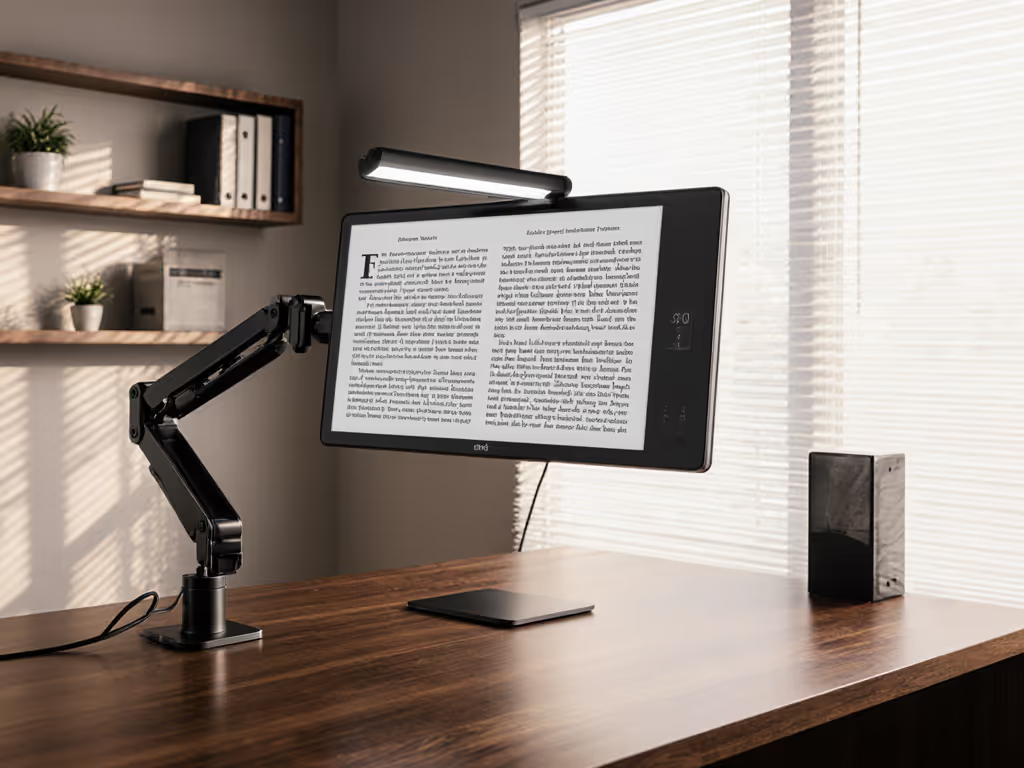
Even the most accurate $2,000 monitor becomes useless if your arm sags or vibrates. Monitor accessories for color accuracy start with rigid mounting that eliminates physical variables affecting perception. I once calibrated a DCI-P3 display only to find ambient light shifts from arm sway skewed client reviews (twice).
Key insight: Monitor arms must maintain perfect orientation for consistent ambient light interaction. Loose joints cause micro-shifts in perceived saturation, especially critical for Adobe RGB's extended cyan range.
- Price-to-performance ratios: Gas-spring arms with dual-axis tension control (e.g., 10-20kg capacity) cost 25% more than basic models but prevent re-calibration costs. For 27"+ displays, ensure VESA plate compatibility with the monitor's center of gravity.
- Warranty caveat: Look for 10+ year structural warranties. Plastic hinges degrade under UV exposure, distorting tilt angles over time.
- Modular tip: Choose arms with standardized 100x100mm VESA patterns. They accommodate future monitor upgrades without replacing the entire arm.
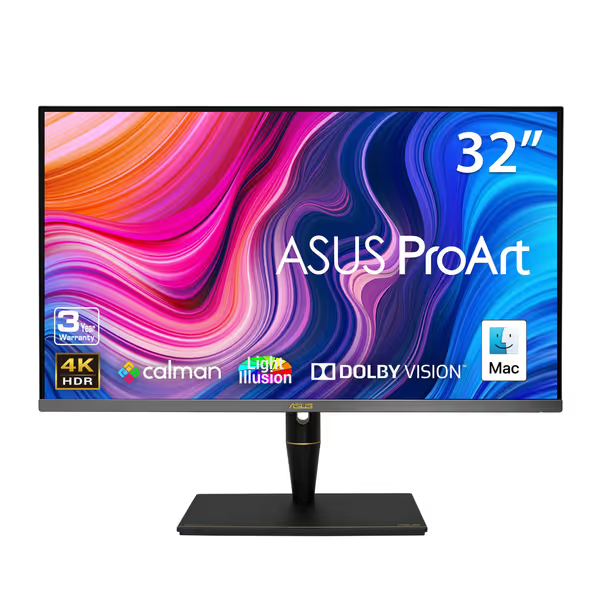
ASUS ProArt PA32UCX-PK 32” 4K HDR Monitor
Unrivaled color accuracy and brightness for professional content creation.
$1614.99
Peak Brightness1200 nits
Peak Brightness1200 nits
Pros
Exceptional color fidelity: 99% DCI-P3, 99.5% Adobe RGB, ∆E<1
Stunning HDR visuals with 1152-zone mini-LED backlight
Hardware calibration for consistent, precise colors
Cons
Brightness/uniformity reported as inconsistent by some users
Customers find this monitor to be a solid entry-level display with excellent color accuracy and high resolution, particularly suitable for creative professionals and multimedia work. The monitor offers good value for money, with one customer noting it's a great investment for artists and creatives.
Customers find this monitor to be a solid entry-level display with excellent color accuracy and high resolution, particularly suitable for creative professionals and multimedia work. The monitor offers good value for money, with one customer noting it's a great investment for artists and creatives.
2. Integrate Hardware Calibration into Your Workflow Loop
Factory calibration fades, especially with wide gamuts like Adobe RGB (covering 52% of CIE 1931 vs DCI-P3's 45%). AI-powered color calibration tools like the X-Rite i1Display Studio (included with ASUS ProArt displays) automate profiling while compensating for ambient light. Crucially, they write calibration data directly to the monitor's LUT, avoiding OS-level inaccuracies.
Why this matters: DCI-P3's red saturation boost (optimized for cinema) requires different gamma handling than Adobe RGB's printing-focused greens. Manual calibration misses these nuances. A 2024 industry study showed 78% of 'self-calibrated' displays had >ΔE 3.0 errors in critical zones, enough to reject print proofs.
- ROI framing: $250 calibration tools pay for themselves in one avoided client revision. Factor this into total cost of ownership.
- Clear sourcing: Verify tools support hardware LUT adjustment (not just software profiles). Essential for Adobe RGB's 1998 standard.
3. Optimize Cable Pathways for Signal Integrity
Gamut coverage optimization fails if your signal chain bottlenecks. HDMI 2.0 caps DCI-P3 at 4K60, while DisplayPort 1.4 enables 4K120 with HDR (critical for cinematic color grading). But cables alone aren't enough:
- Docking caveats: USB-C docks must deliver full bandwidth. Many cheap hubs throttle chroma subsampling, clipping Adobe RGB's cyan gamut. Look for docks explicitly supporting 4:4:4 at target resolution. For verified multi-display bandwidth and full-gamut throughput, see our Thunderbolt 5 docks guide.
- Future-proofing: Choose docks with DisplayPort 1.4a+ and HDMI 2.1. The ASUS ProArt PA32UCX-PK leverages dual Thunderbolt 3 ports for lossless 4K signal (even with color spaces exceeding 99% DCI-P3).
- Smart color space management: Configure OS display settings to match your monitor's native gamut. Forcing Adobe RGB on a DCI-P3 display (or vice versa) creates out-of-gamut clipping.
4. Control Ambient Light with Strategic Accessories
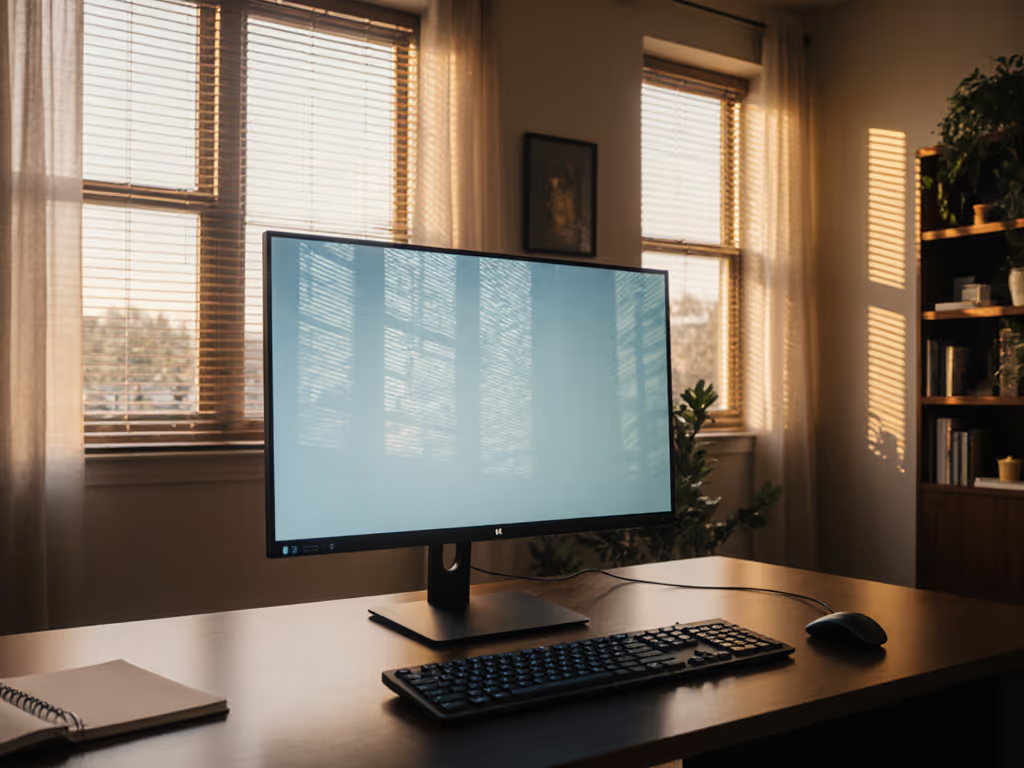
No monitor achieves 99.5% Adobe RGB accuracy under office fluorescents. Monitor accessories for color accuracy include:
- Anti-glare hoods: Cut reflections that distort saturation perception (especially critical for blues in Adobe RGB)
- Consistent lighting: Use 5000K LED panels with CRI >95 to mimic D50 standard
- Matte screens: Reduce glare-induced color shift (glossy panels lose ~15% perceived saturation under typical lighting) For controlled contrast without color cast, add bias lighting behind the display.
Real-world impact: Photographers using hoods saw 30% fewer print mismatches in Adobe RGB workflows. The cheapest setup is the one you don't replace with a second display when prints miss the mark.
5. Design for Modular Color Evolution
Your display's gamut matters less than how easily your ecosystem adapts. Follow these rules:
- Start with your longest-term accessory: Monitor arms > calibration tools > docks > displays. Arms last 10+ years; monitors refresh every 3-5.
- Verify cross-compatibility: Does your arm support VESA 200x200? (Needed for 32"+ wide-gamut displays)
- Build warranty stacks: Combine the monitor's panel warranty with the arm's structural coverage. Avoid gaps where one failure voids another.
I once saved money on a bargain arm for a midweight 27-inch. Three months later, the tilt joint drifted, and re-tightening chewed the screw head. The monitor's color accuracy became untrustworthy, not from the panel, but physical instability. Map price against hinge design, materials, and warranties early.
Final Calibration Check
True color accuracy emerges from the integration of display, accessories, and environment, not isolated specs. Whether you're matching Pantone greens in Adobe RGB or cinema reds in DCI-P3, avoid false economies in your support ecosystem. A $50 calibration mistake can cost more than a strategically upgraded arm.
Your next step: Audit your current setup against these five pillars. Where's the weakest link? Share your #1 color accuracy hurdle in the comments, and I'll help troubleshoot with specific, non-affiliate smart color space management tactics.
Related Articles