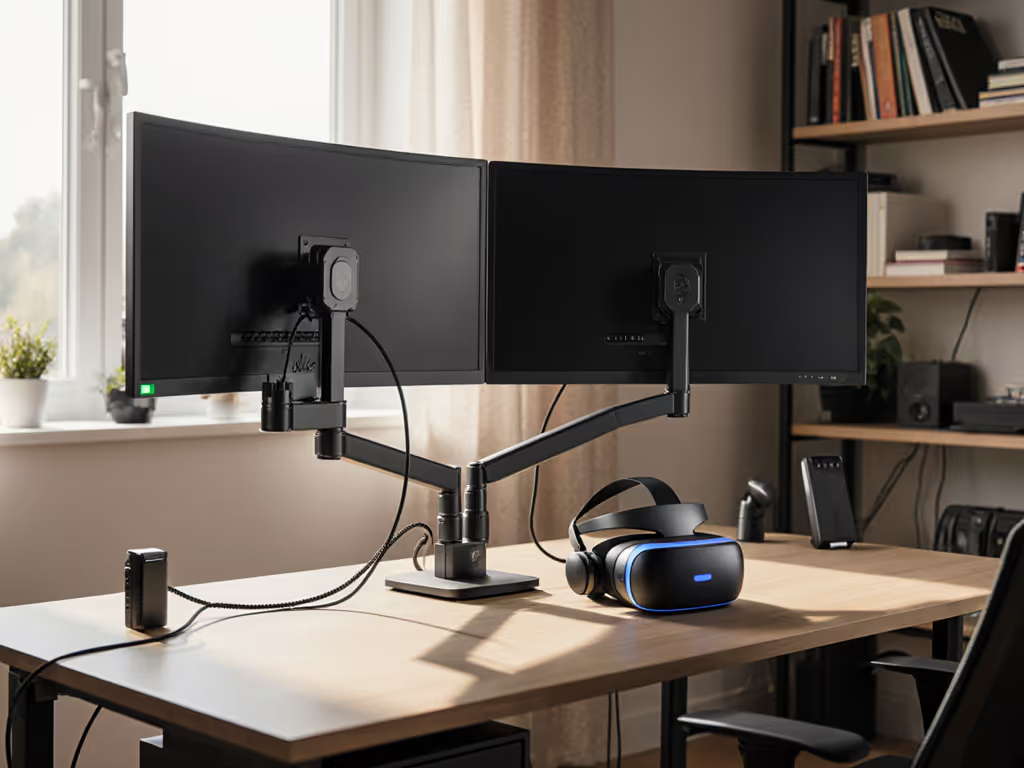
Wearable-Integrated Monitor Setup: Auto-Adjust for Fatigue
By Elena Petrovic • 12th Jan
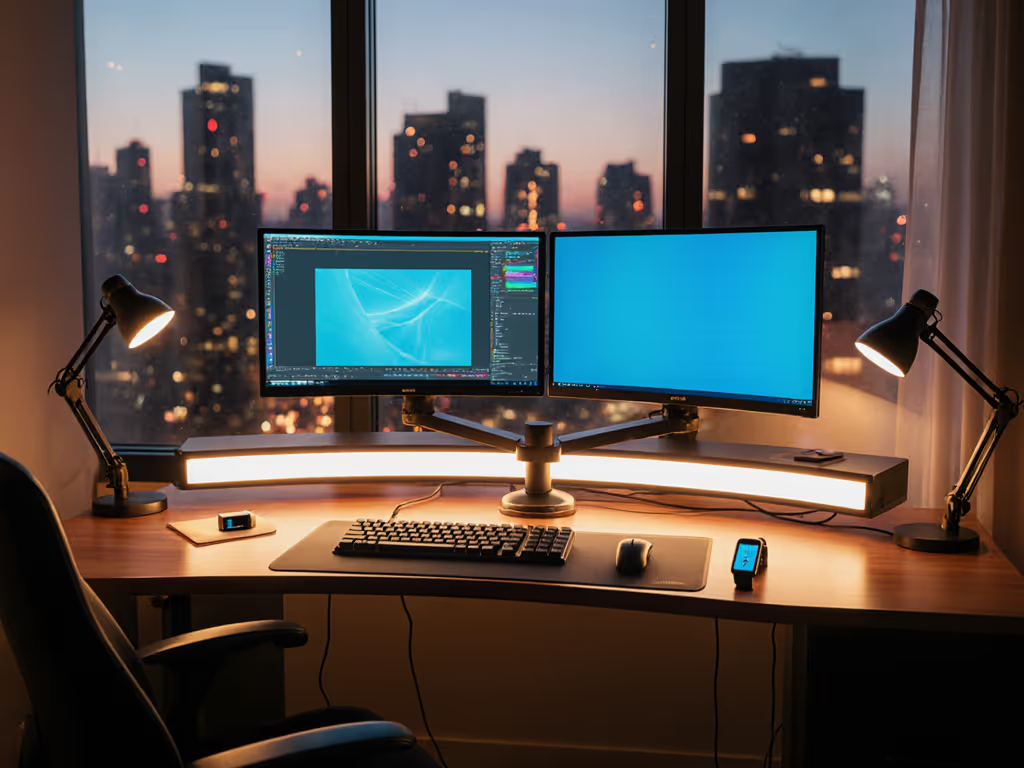
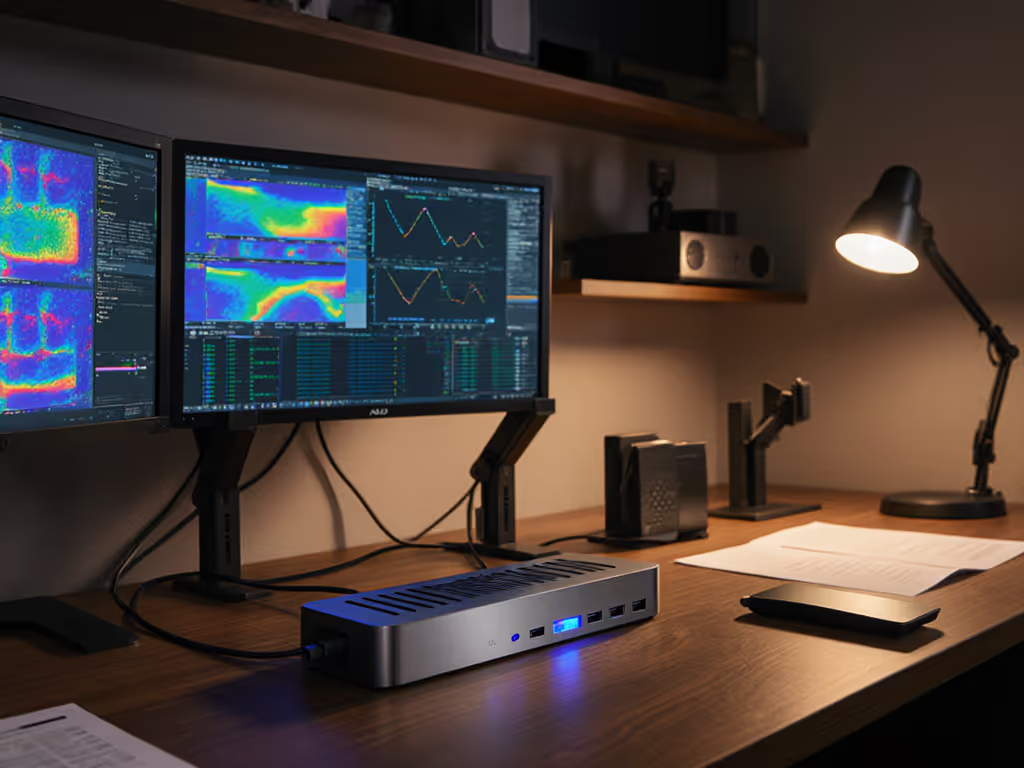
The promise of wearable-integrated monitor setup technology (systems that supposedly auto-adjust displays using biometric monitor positioning data) circulates heavily in ergonomic forums. Yet as a color workflow specialist who treats mounts and light as part of the image pipeline, I urge caution: mechanical stability remains the non-negotiable foundation of visual accuracy. While fatigue detection monitor systems capture headlines, their real-world value for color-critical work remains unproven. Before chasing health data to workspace automation, address the tangible instability that actually degrades your perception. Color accuracy includes the mount, the cables, and the light, not speculative biometric feed loops. See our VESA mount compatibility guide for standards and fit checks.
FAQ Deep Dive: Biometric Monitor Adjustments vs. Foundational Stability
Q: Do real-time posture adjustment monitors prevent fatigue-related errors?
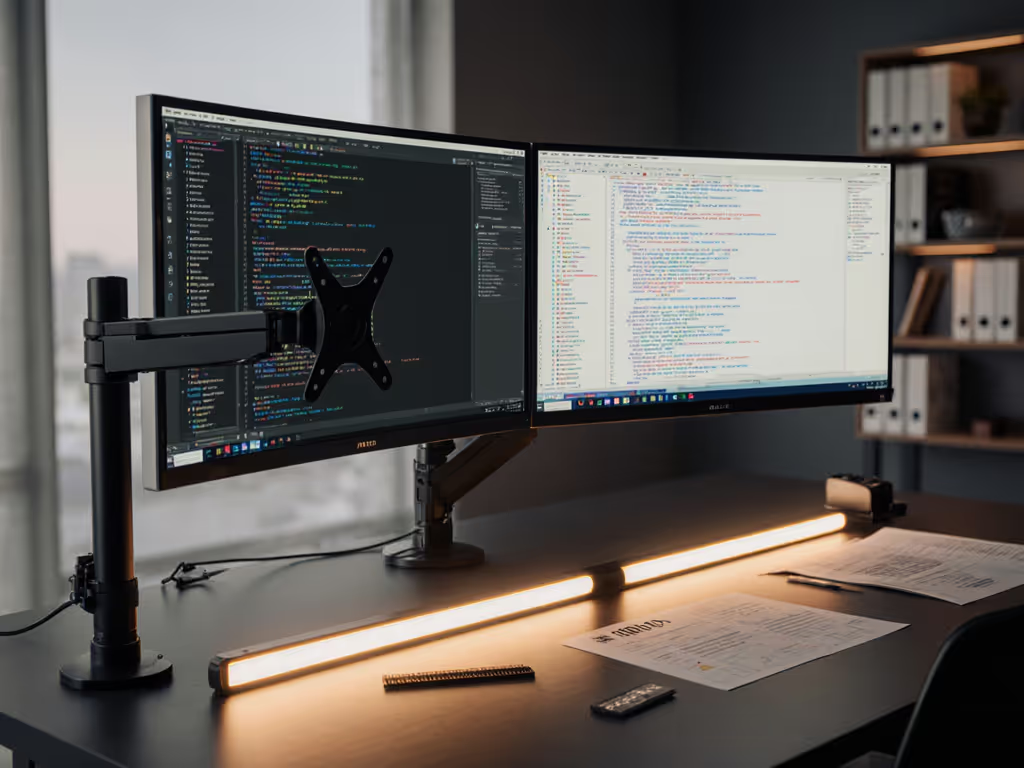
A: Not without mechanical stability first. Wearables tracking posture or fatigue (like wrist-based HRV or GSR sensors) may detect physiological drift, but they cannot compensate for a fundamental truth: a wobbling reference monitor makes all visual judgments unreliable. During high-stakes grading sessions, I've seen sub-millimeter arm deflection (caused by cable strain or loose tolerance) shift perceived black levels by >0.5 Nits. This micro-instability, invisible to the naked eye, induces the very fatigue wearables claim to solve. Prioritize mounts with verified load-bearing stability over center-of-gravity (COG) before considering adaptive ergonomic monitoring. For heavy or extra-wide displays, choose from stable ultrawide monitor arms proven to resist wobble. If your monitor sways when scrolling, biometric data is irrelevant noise.
Color accuracy includes the mount, the cables, and the light, not speculative biometric feed loops.
Q: Can health data to workspace automation improve color-critical workflows?
A: Only if environmental variables are controlled. Consider this: fatigue detection monitor systems may alert you to declining alertness, but they cannot fix uneven ambient light or cable-induced interference. In print proofing, a 5° C shift in monitor temperature (from inadequate ventilation) alters ΔE by 1.2, a critical error when targeting ΔE<1.5. Meanwhile, unshielded monitor cables in high-EMI environments (common near standing desks with motors) add noise indistinguishable from physiological fatigue. Consistency is image quality. Focus on:
- Cable integrity: Use braided, shielded DisplayPort 1.4 cables (tested for <0.1% signal loss at 10m)
- Thermal stability: Allow 10cm clearance behind monitors; avoid stacking on laptop docks
- Light control: Maintain 5000K ambient lighting ±200K within 10% uniformity (measured via spectrophotometer) For ambient light control that reduces strain, follow our bias lighting guide.
Until these fundamentals are locked down, biometric monitor positioning delivers false confidence.
Q: How does real-time posture adjustment impact monitor calibration?
A: It rarely addresses the core issue: viewing geometry. Many creatives assume adaptive ergonomic monitoring adjusts luminance based on head position. Reality? Most systems only shift display height/tilt, not compensating for the actual variables that degrade color perception:
- Viewing angle shifts: >15° off-axis on IPS panels shifts white point by 700K
- Reflection dynamics: A 0.5mm monitor sway changes glare patterns irreversibly
- Cable-induced capacitance: Unsecured USB-C cables near audio interfaces create 60Hz hum in ADCs
During a cinema master review, I traced inconsistent shadow detail to a monitor arm's harmonic resonance at 12 Hz, matching the HVAC system's cycle. After isolating the arm's mass with vibration-damping pads, blacks stabilized without biometric inputs. To minimize sag and drift, compare gas spring vs counterbalance arms. Mechanical and environmental stability are as vital as gamut.
Q: Are fatigue detection monitor systems worth integrating?
A: Only as supplementary data, not workflow anchors. While wearables like ReadiWatch (tracking HRV/respiratory rate) show promise in alerting to fatigue onset, they fail to solve why fatigue occurs in visual work:
| Root Cause | Wearable Detection Lag | Stability Fix |
|---|---|---|
| Monitor micro-vibration | 8-12 mins post-onset | Vibration-damping mounts |
| Unshielded cable EMI | Not detected | MIL-SPEC shielded cables |
| Ambient light fluctuation | 15+ mins | Constant-illuminance LED panels |
Research confirms wearables detect fatigue after performance degradation begins (PMC8715033). Meanwhile, a poorly mounted monitor creates fatigue-inducing instability from minute one. Focus on eliminating physical stressors first.
The Stability-First Protocol for Color-Critical Work
Instead of chasing health data to workspace automation, implement these field-tested steps:
1. Anchor Your Monitor Rigorously
- Verify COG limits: For ultrawide panels, ensure mounts support 1.5x the panel's weight at maximum extension (e.g., a 10kg 45" OLED requires 15kg+ capacity)
- Isolate vibrations: Use Sorbothane pads between arm and desk; avoid grommet mounts on thin standing desks
- Strain-relieve cables: Employ braided sleeves with 30° bend limiters, never let cables bear weight
2. Control the Light Path
- Hoods: Mandatory for displays >250 nits; diffuse internal reflections that mimic fatigue-induced glare
- Ambient sensors: Position away from monitor bezels (they misread when near display heat)
- Light uniformity: Measure with an i1Display Pro, aim for <15% variance across the workspace
3. Validate Every Connection
- Test cable integrity: Use a USB-C checker (e.g., QC1000) to verify 90W+ PD delivery and 8Kbps bandwidth If you're upgrading to single-cable setups, read our USB-C monitor accessories guide to avoid bandwidth and PD pitfalls.
- Avoid daisy-chaining: Each adapter adds 0.3-1.1dB signal loss, fatal for HDR10 at 1000 nits
- Power sequencing: Cycle monitors before PCs to prevent EDID handshake failures
Conclusion: Stability Enables Perception
The allure of wearable-integrated monitor setup technology is understandable, but it distracts from the physics of visual perception. When I fixed that micro-swaying grading monitor, perceived contrast improved before any biometric shift. Precision isn't just gamut; the mount and light path are part of the image. Until mechanical stability is absolute, biometric data is noise. Invest in verified mounts, shielded cables, and controlled lighting first. Then, if wearables demonstrate repeatable, actionable insights in your workflow, they may earn a place. Until then, stabilize your foundation.
Further Exploration
- Display Calibration Best Practices: ISCC Technical Committee Report
- VESA Mount Stability Guide: Mechanical Tolerance Analysis
- Controlled Vocabulary for Color Environment Specifications (ISO 12646:2019)
Color accuracy includes the mount, the cables, and the light, always.
Related Articles