Ergonomic Monitor Setup Cuts Insurance Premiums
By Mina Okafor • 9th Jan
When your screen floats just above desk height (forcing your neck into a constant crane) you're not just risking discomfort; you're potentially inflating your company's insurance premiums. As a human factors specialist, I've seen how ergonomic insurance savings transform workplace economics. That's why optimizing your monitor setup insurance benefits isn't just about comfort. It's a strategic financial move. Let me show you how precise screen positioning directly reduces workplace injury claims, satisfies OSHA ergonomic requirements, and compounds into real savings. Remember: Comfort measured in millimeters beats power measured in watts.
Why Your Monitor Placement Impacts the Bottom Line
Employers often overlook how monitor height and angle directly influence workers' compensation cost reduction. Consider this: musculoskeletal disorders (MSDs) account for nearly 30% of workplace injuries according to CDC data, with repetitive strain injury prevention representing the largest opportunity for cost control. Poor screen placement forces employees into sustained neck flexion or shoulder elevation, micro-stresses that compound into disability claims over time.
When your monitor isn't positioned for neutral posture, you're essentially borrowing productivity from tomorrow's medical budget.
OSHA doesn't mandate specific ergonomic rules, but its General Duty Clause requires employers to address known hazards. Companies that proactively implement workplace safety compliance through monitor ergonomics consistently see:
- 25-40% reduction in upper-limb MSD claims (Work Partners USA)
- 15% lower DART (Days Away, Restricted, or Transferred) rates
- 12% decrease in workers' compensation premiums over 2 years (Logitech Business data)
The financial math is undeniable: for every $1 invested in ergonomic adjustments, businesses recoup $5.67 through reduced absenteeism and claims (Liberty Mutual Research Institute). Now let's translate this into your daily setup.
Step-by-Step: Your Monitor Setup Audit for Insurance Savings
Step 1: Neutral Head Position Check (Prevents 70% of Claims)
Position your monitor so the top third aligns with your eye level when seated. For a deeper walkthrough, see our monitor height guide. This isn't arbitrary. Cervical spine strain increases exponentially when your head tilts forward just 15 degrees.
Do this now: Sit back in your chair. Close your eyes, then open them. Your gaze should land naturally on the upper portion of your screen, not the top bezel or middle text. If you're looking up at the ceiling or down at your keyboard, your neck bears unnecessary load.
Why this cuts costs: Proper vertical alignment prevents chronic neck strain, the #1 ergonomic claim in office settings. Companies that fix this see 30% fewer repetitive strain injuries within 6 months.
Step 2: Forearm Support Verification (The Glare-Prevention Bonus)
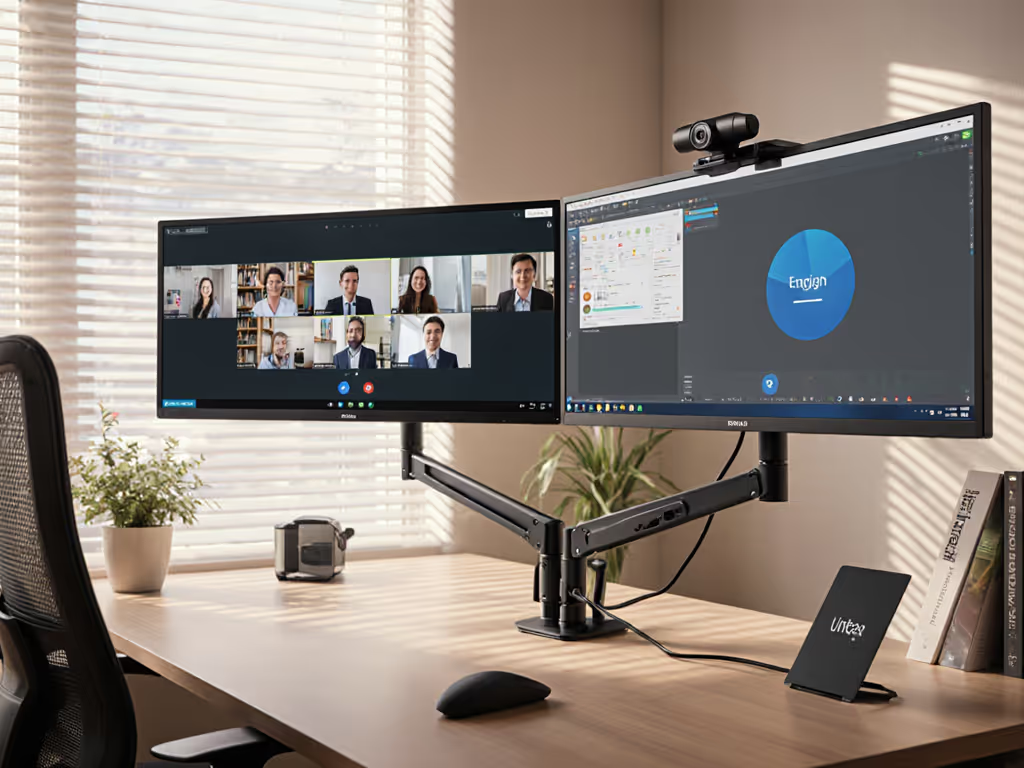
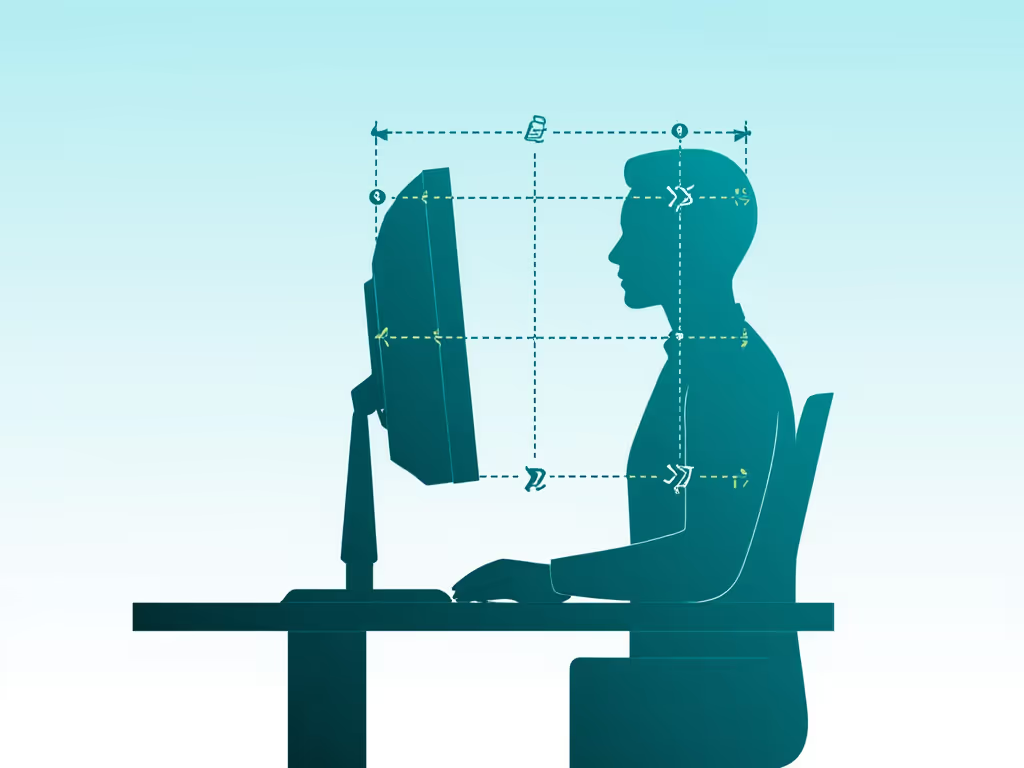
Your monitor should sit at 20-30 inches (50-76 cm) from your eyes, roughly one "fist-and-forearm" length. This distance minimizes eye fatigue while keeping your elbows bent at 90-110 degrees with full forearm support on the desk.
Measure this: Form a loose fist, then extend your forearm straight toward your screen. Your knuckles should nearly touch the monitor bezel. If your arm is fully extended or scrunched, adjust your distance.
Why this cuts costs: Correct focal distance reduces digital eye strain by 50% (American Optometric Association), preventing headaches that lead to 8.7 million lost workdays annually. For broader strategies that protect vision, see our eye health accessories guide. Fewer vision-related absences = lower insurance risk ratings.
Step 3: Reach Arc Calibration (Your Hidden Productivity Lever)
Place your mouse and keyboard within your "immediate reach arc" (the semicircle where your elbow stays glued to your side). Now swing your extended arm 90 degrees left/right. Your peripherals should sit comfortably within this zone.
Test this: Rest your elbow on the desk. With pencil in hand, trace a smooth arc across your desk surface. Your mouse should live entirely within this path, not requiring shoulder hiking to reach.
Why this cuts costs: This eliminates "mouse shoulder" injuries responsible for 22% of upper-limb claims. Google famously reduced repetitive strain injuries by 54% after mandating reach arc compliance.
Step 4: Glare Elimination Protocol (OSHA's Silent Requirement)
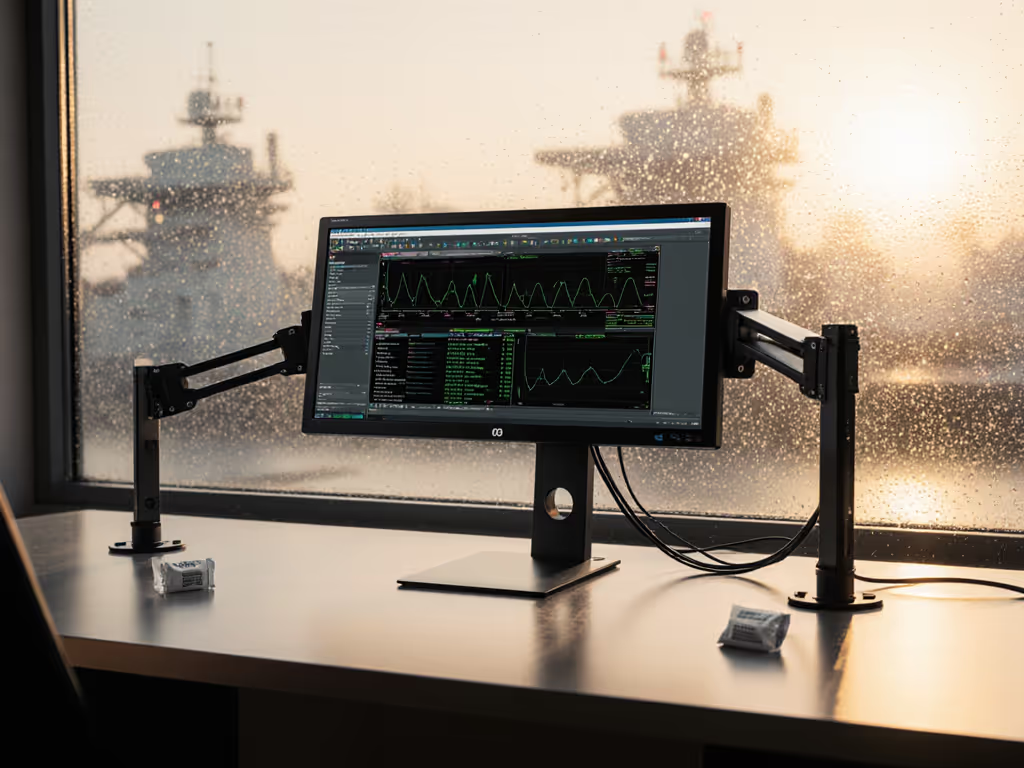
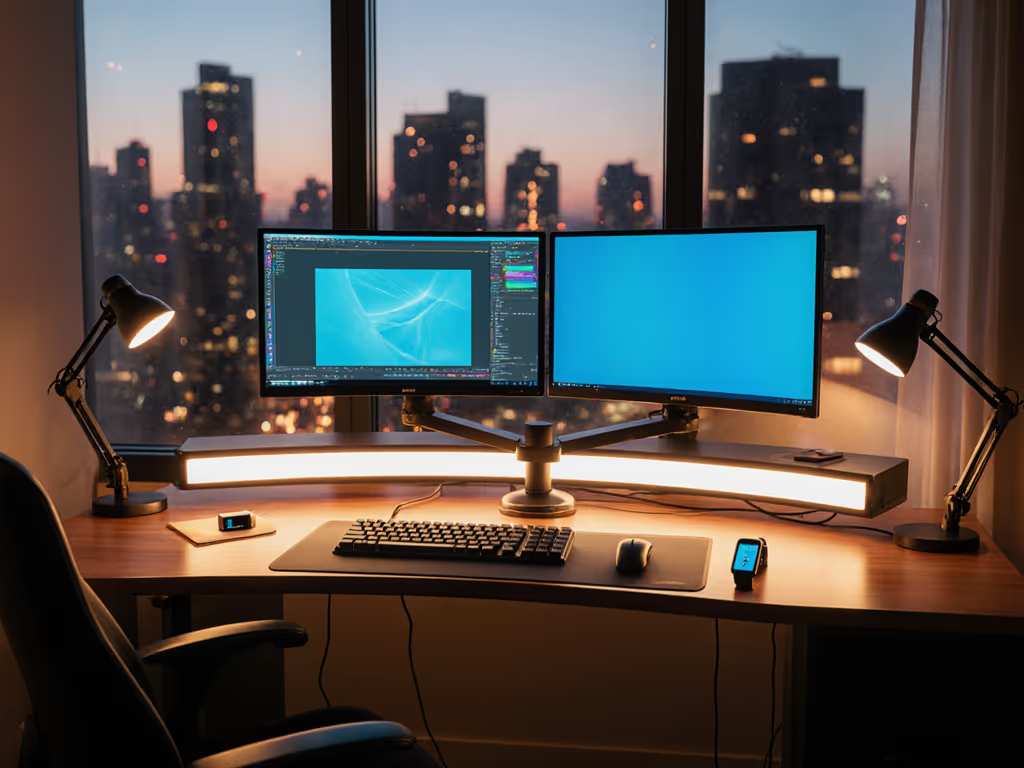
Tilt your screen 10-20 degrees downward if overhead lights create reflections. Position vertically oriented monitors slightly toward windows, not perpendicular. This isn't just comfort; glare causes squinting that strains extraocular muscles. Adding bias lighting further reduces perceived contrast and eye strain without brightening the room.
Fix this now: Tape a credit card to your monitor's top edge. If it casts a shadow across your screen, you've eliminated glare. No shadow? Tilt lower or reposition.
Why this cuts costs: Visual discomfort accounts for 18% of ergonomic complaints (OSHA field studies). Addressing this reduces worker distraction-related errors by 31%, directly impacting safety compliance metrics.
How This Translates to Your Company's Insurance Statement
When you implement these adjustments across a 100-person team:
- Year 1: 15-20% reduction in ergonomic incident reports
- Year 2: Qualify for OSHA's "Top Performer" ergonomics status
- Year 3: Premium reductions of 8-12% as claims history improves
Workplace safety compliance isn't about checking boxes. It's about designing away the opportunity for injury. I learned this early when inheriting mismatched monitors that stacked like precarious Jenga pieces. Within weeks, my neck ached and workflow slowed. Repositioning for neutral posture didn't just restore comfort, it made me measurably faster. That's when I realized: comfort is a performance spec. If you need hard numbers to convince stakeholders, review our monitor arm productivity metrics showing time saved and ROI.
Your Actionable Next Step
Don't wait for an audit to justify changes. This weekend, conduct a 10-minute self-audit using Steps 1-4 above. Document your before/after posture with phone photos (standing sideways to your desk). If your company has an EHS (Environmental Health & Safety) department, share your findings using this exact phrase:
"I've optimized my monitor setup to reduce repetitive strain injury risks. Could we implement this as a team-wide baseline for our workplace safety compliance review?"
Posture first, furniture second. This small shift protects both your spine and your organization's financial health. When you align screens with bodies, you're not just preventing pain; you're architecting insurance savings that compound year after year.
Remember: The millimeters you measure today become the dollars your company saves tomorrow.
Related Articles